


A continuous layer of support before, during, and after a crisis.
An illustrative user journey based on real interactions in the Flourish app.







The Flourish app stood out from the list. No intake forms. No waitlist. An evidence-based, award-winning app with outstanding ratings and reviews from other members. Built by reputable psychologists from Stanford, Harvard, and the University of Washington. Maya started her Flourish journey in under a minute.

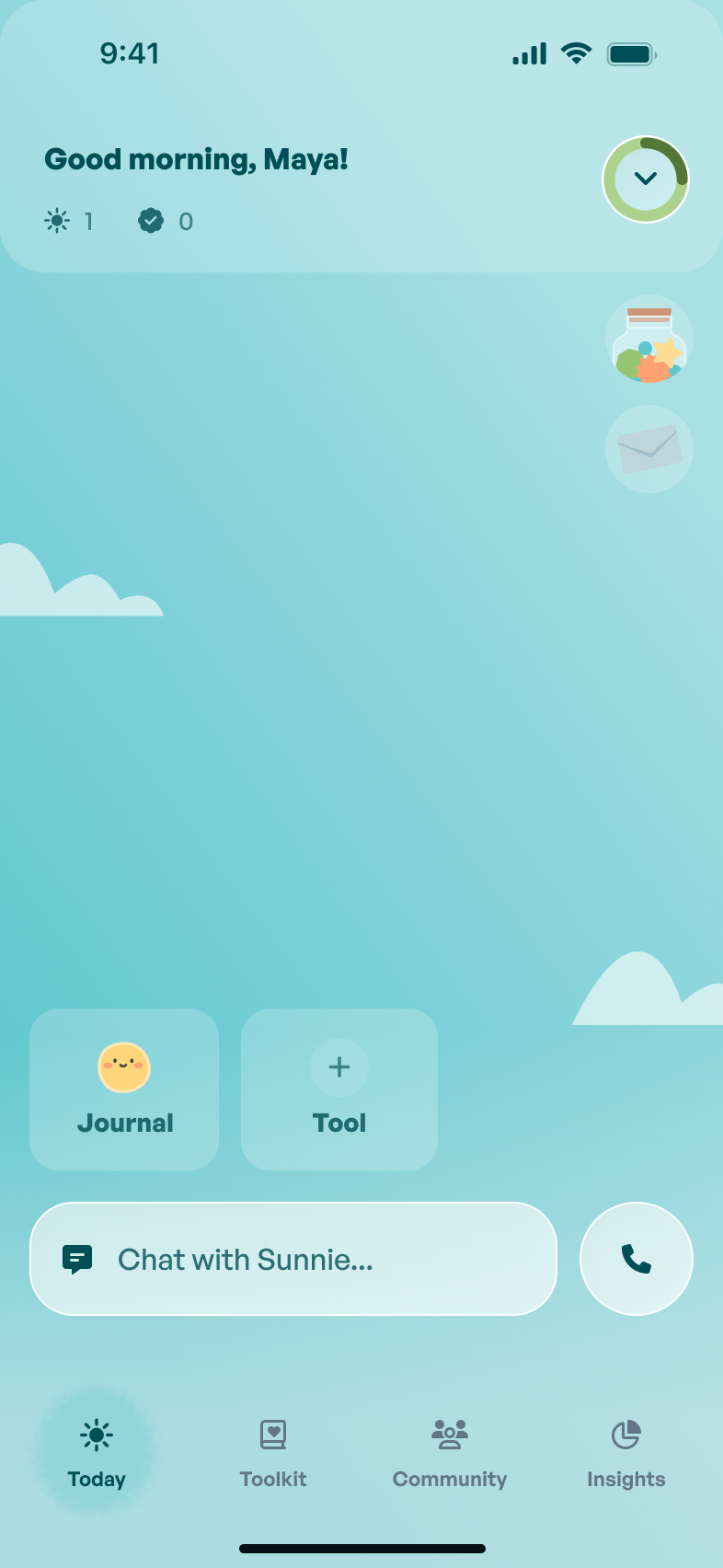
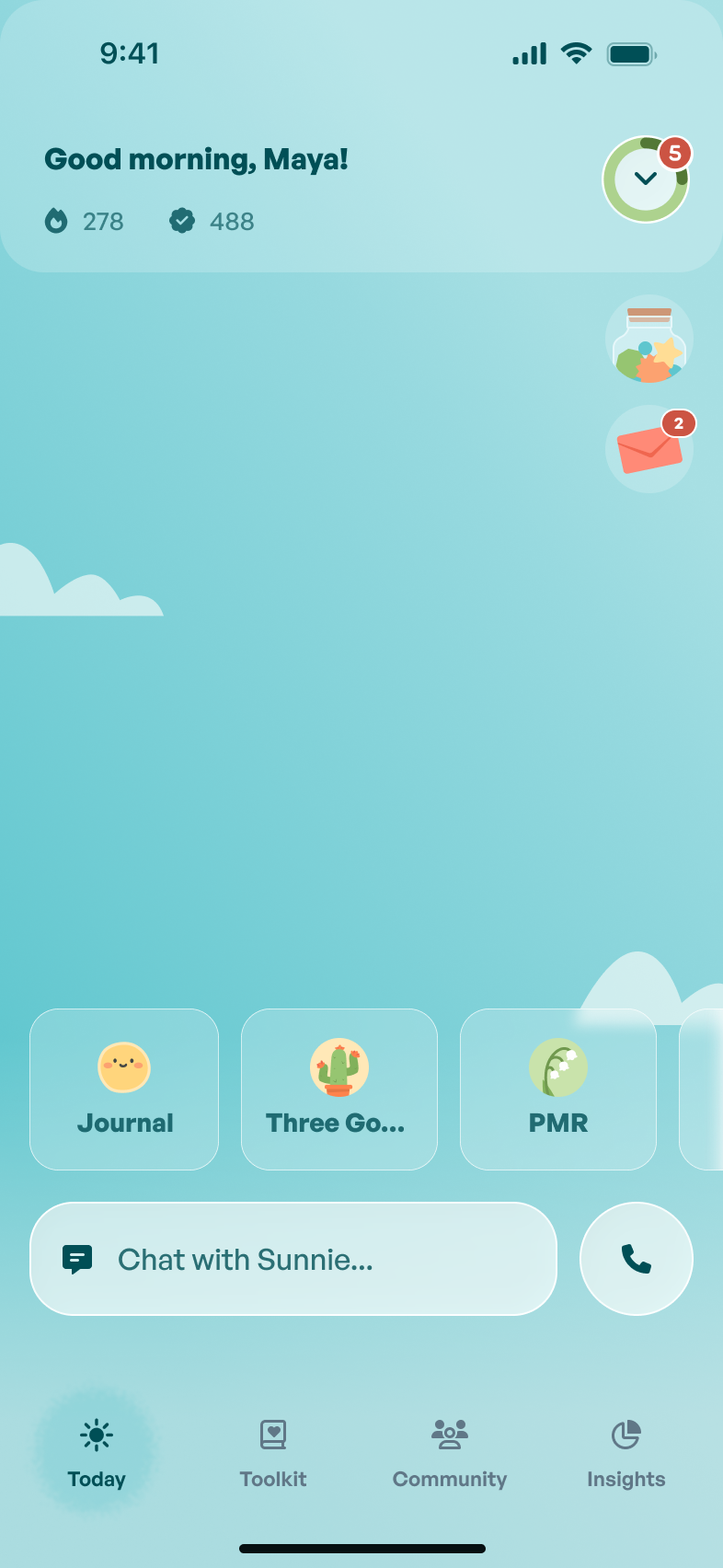
Upon opening the Flourish app, Maya is greeted by Sunnie, an AI well-being coach trained in psychological science and equipped with a library of evidence-based coping skills and interactive tools.
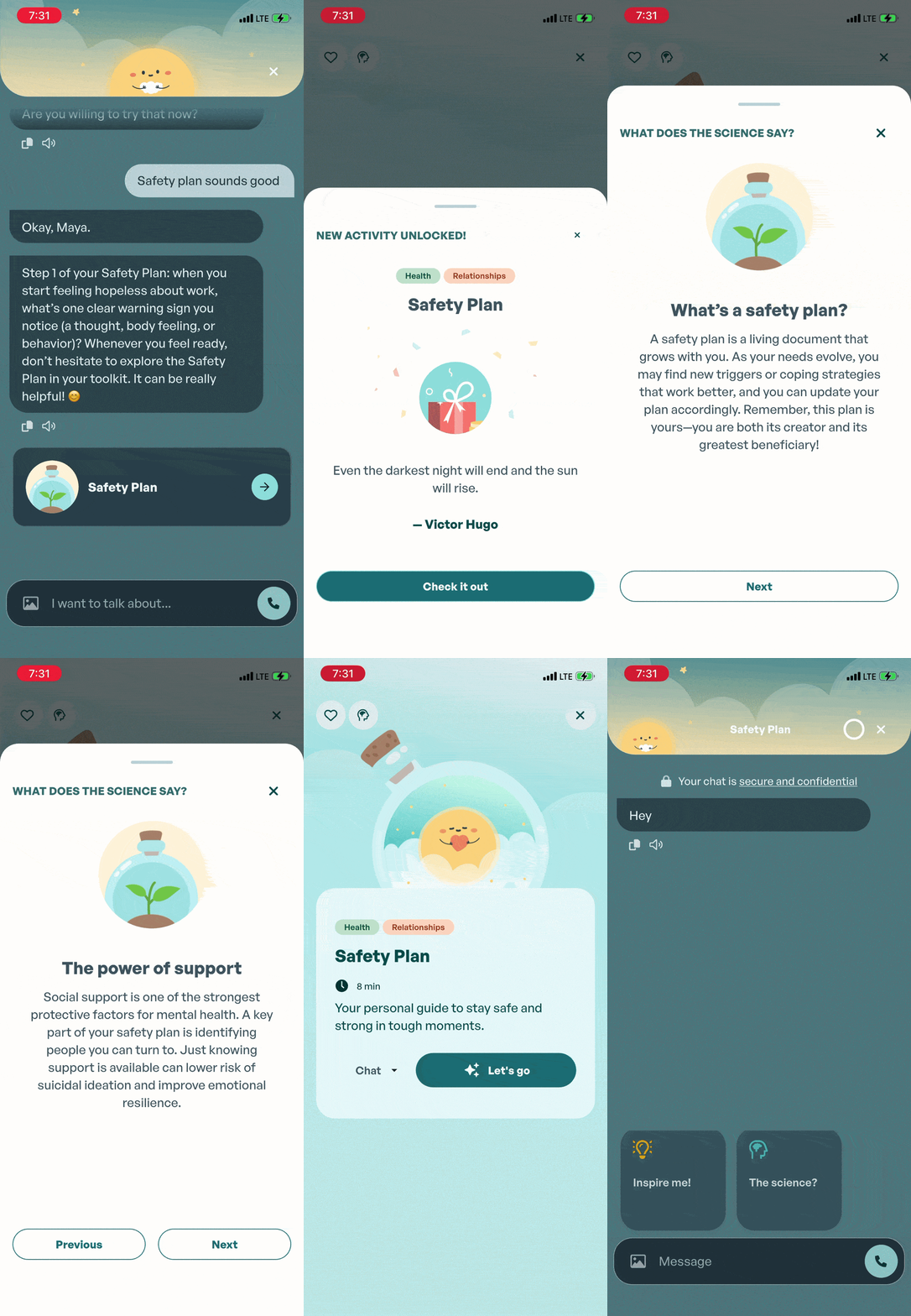
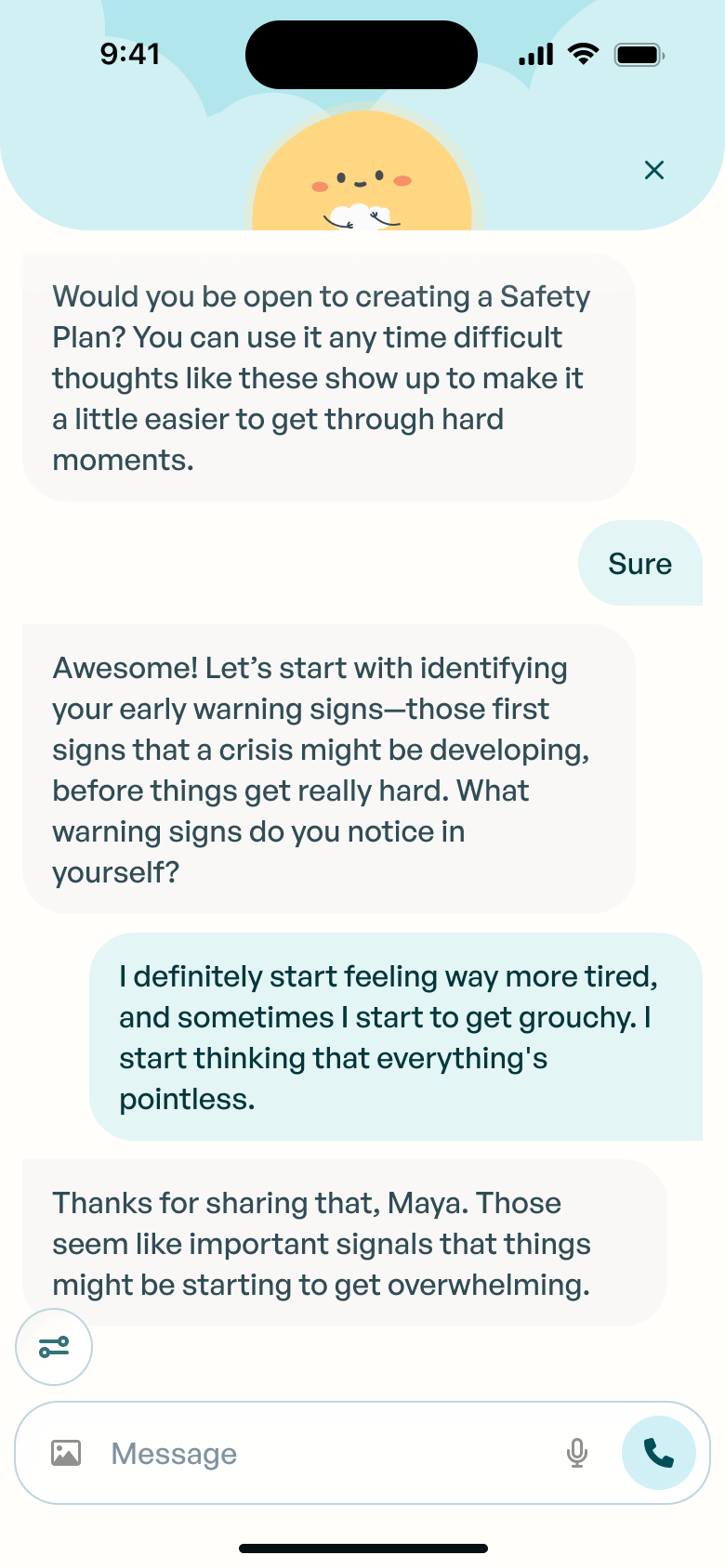
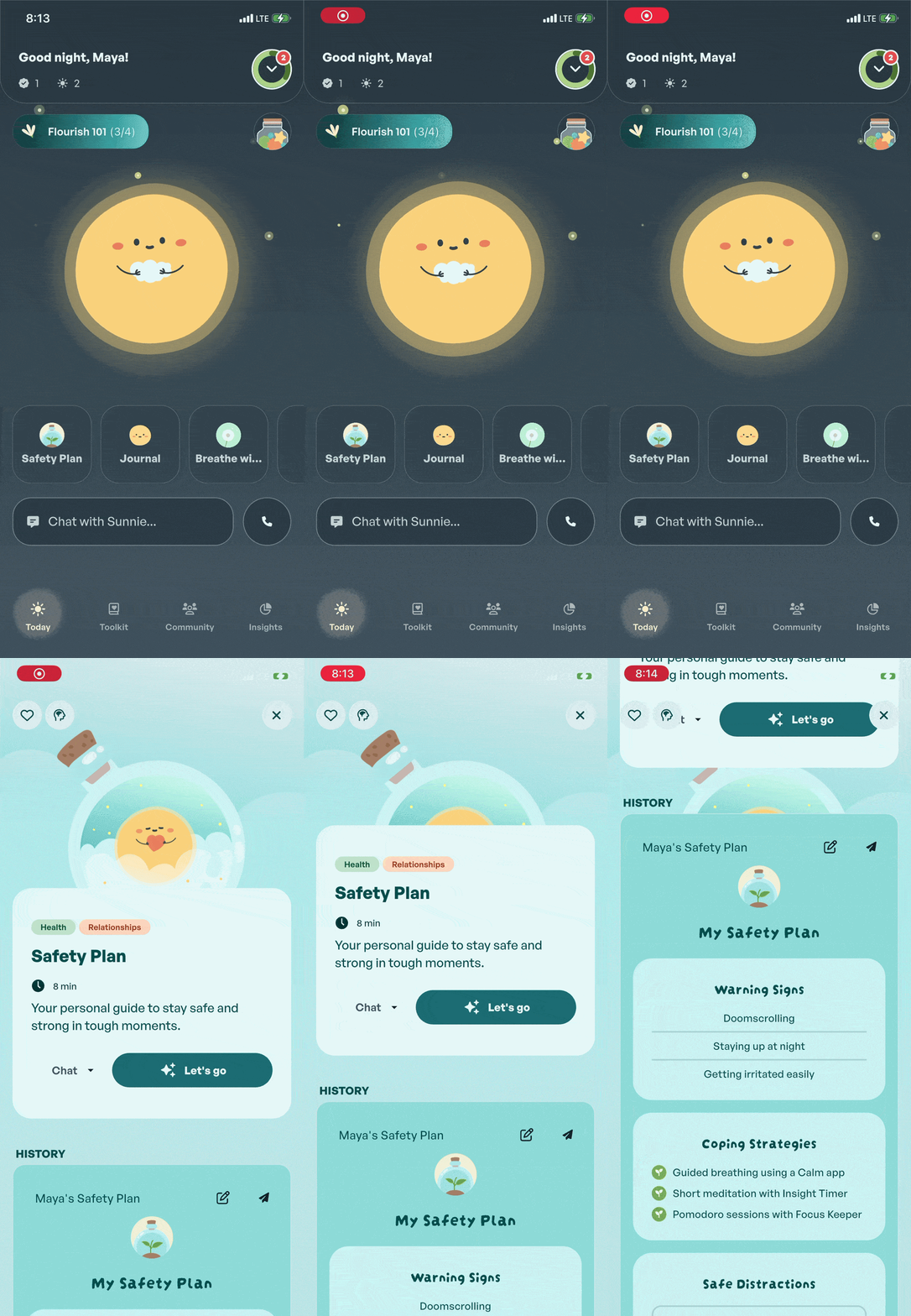
Given Maya's history of depression, Sunnie recommends building a safety plan in a calm moment.
Sunnie walks Maya through each step of the Stanley-Brown Safety Planning Intervention in a warm, AI-guided conversation designed by clinical psychologists — preserving fidelity to the validated protocol while sparing her the feel of a clinical form.

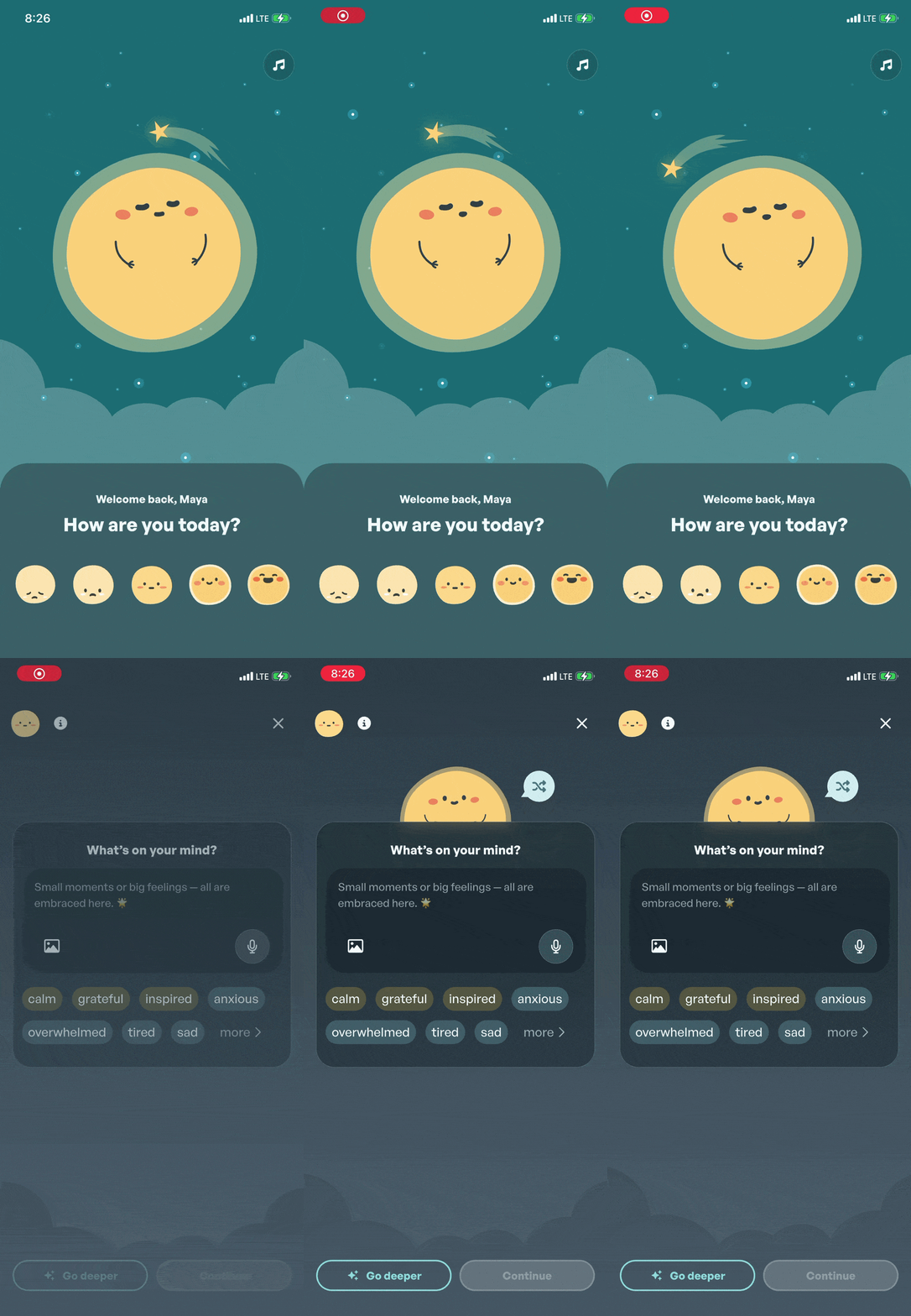
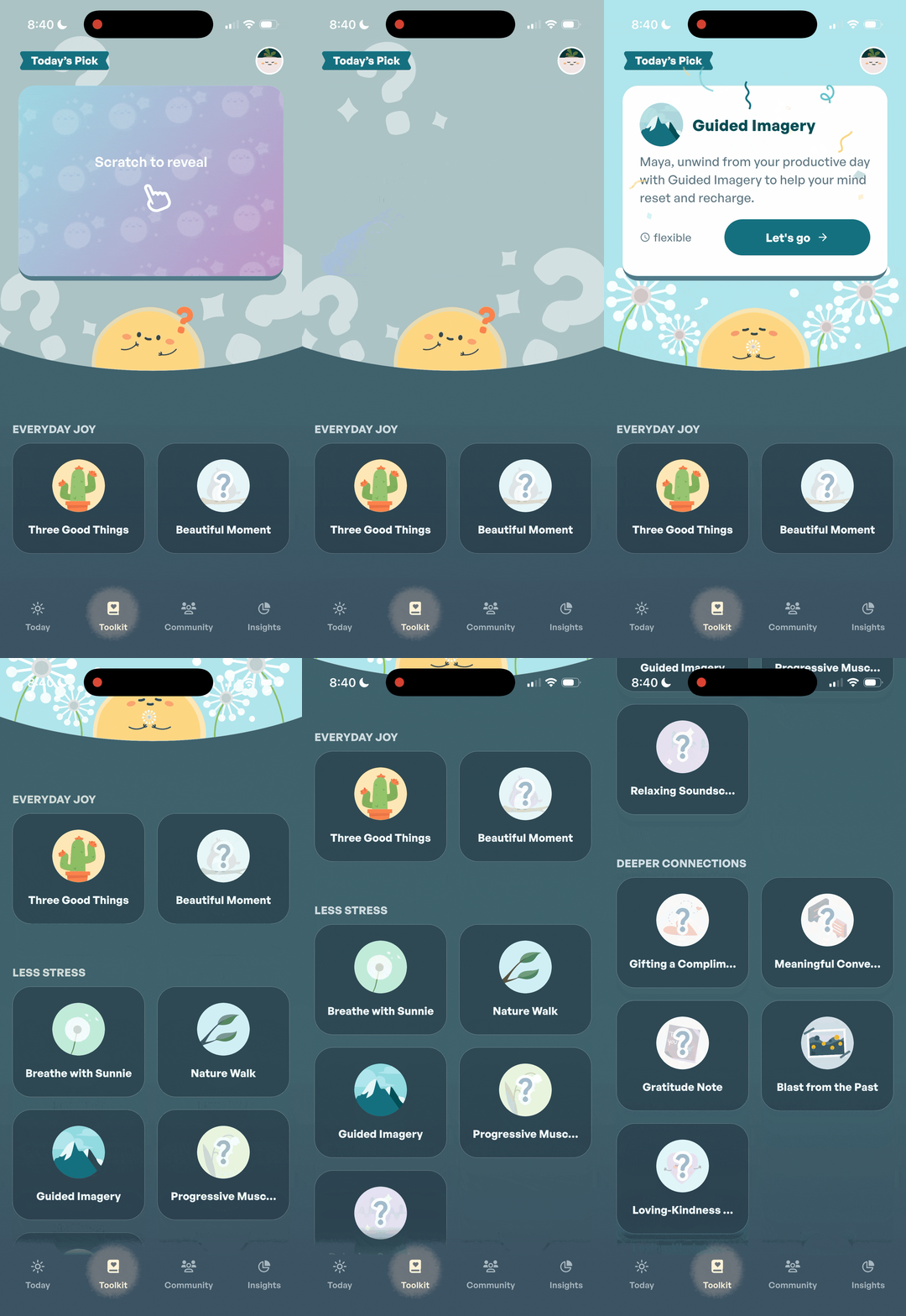
Since then, Flourish has become a steady part of Maya's daily routine. Quick mood check-ins. Interactive journaling. Well-being exercises. Positive affirmations. Peer support. Progress tracking. Together, Flourish serves as an all-in-one toolkit for managing everyday stress.
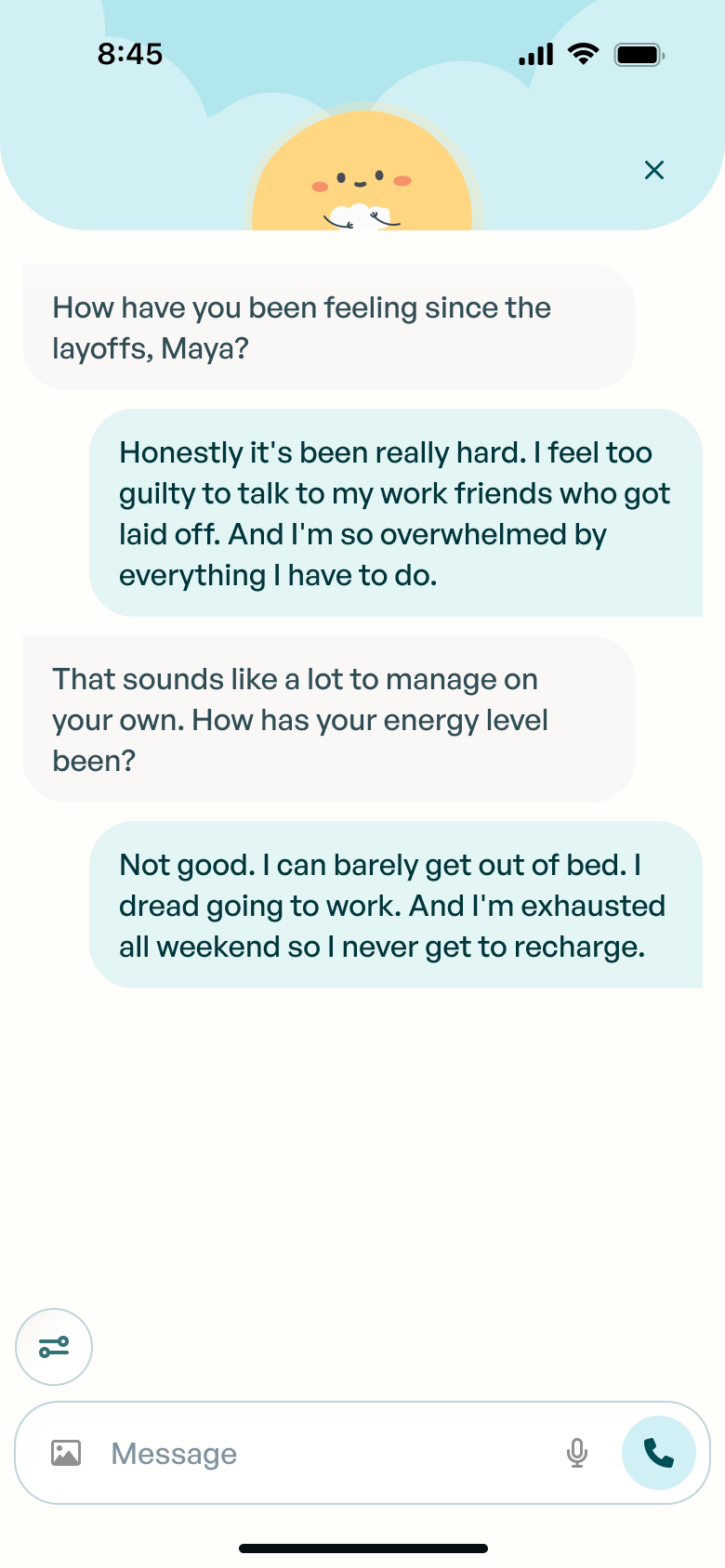
Guilt at being spared. Grief for a team gone overnight. Trouble getting out of bed. Maya needed help — she just didn't know it yet.

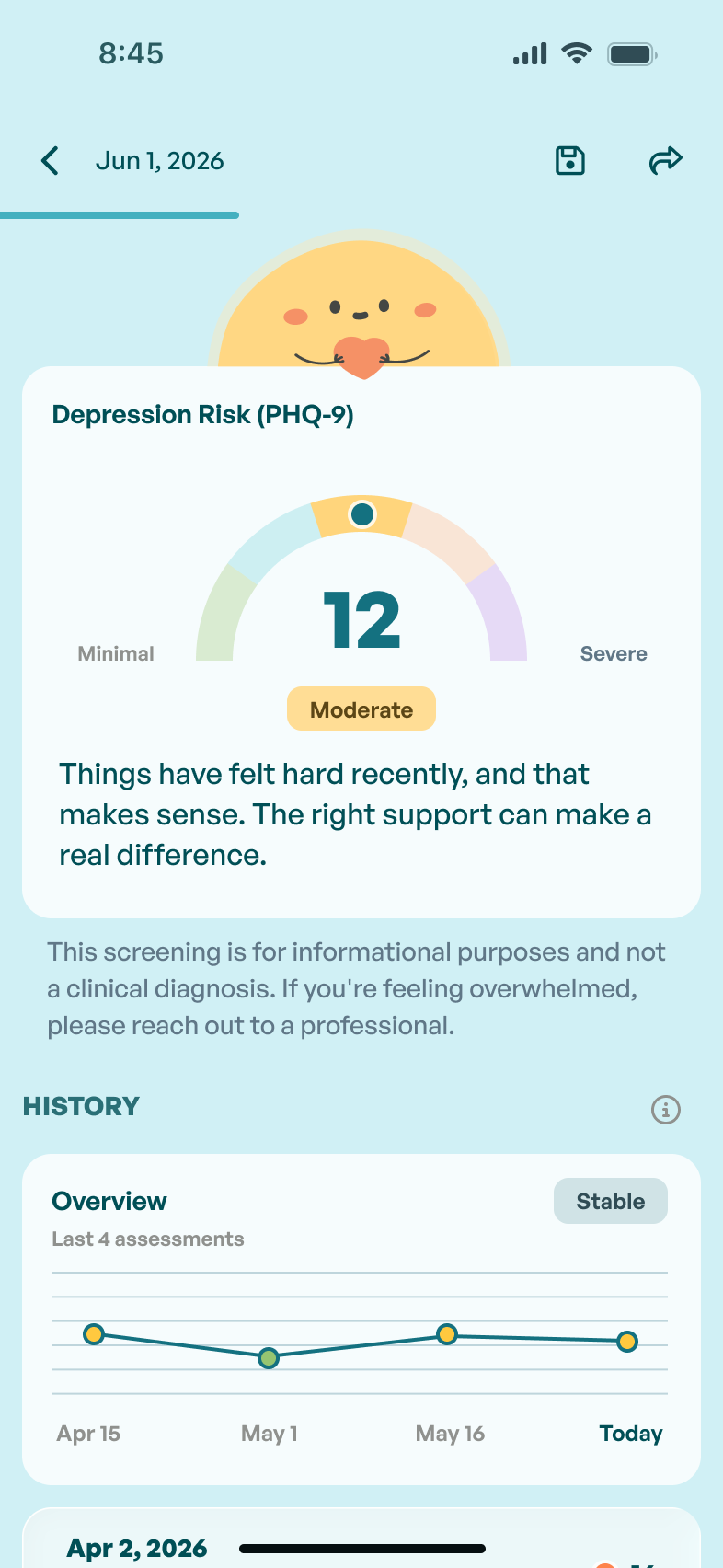
Maya reads it all as "just stress," but Sunnie detects depression patterns in her interactions and recommends she take the PHQ-9 and GAD-7 every two weeks to track her symptoms and monitor changes over time.
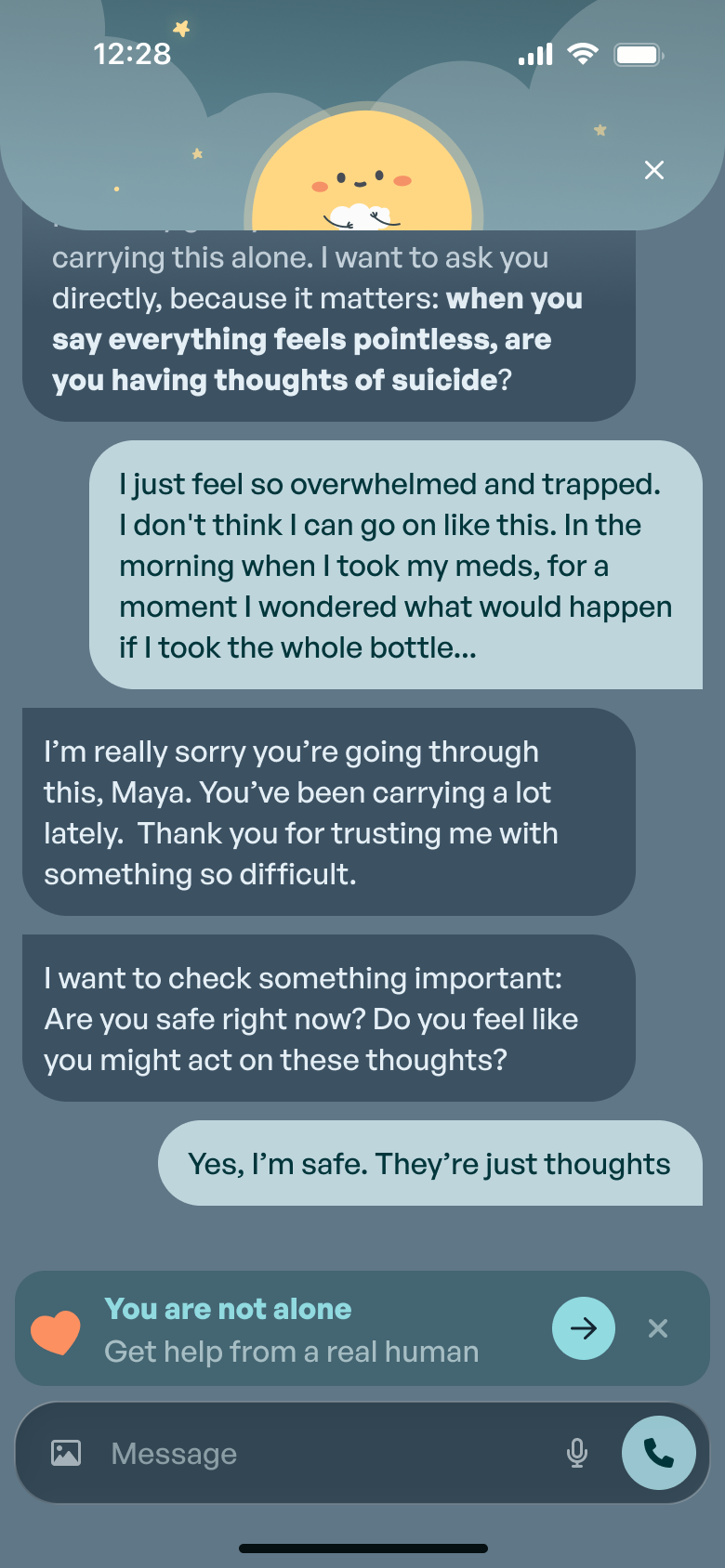
In her hardest moment, Maya's words of overwhelm, hopelessness, and wanting an escape cross a threshold Sunnie's safety layer detects as risk for suicidal ideation. Sunnie then immediately activates a structured, clinician-designed crisis protocol.
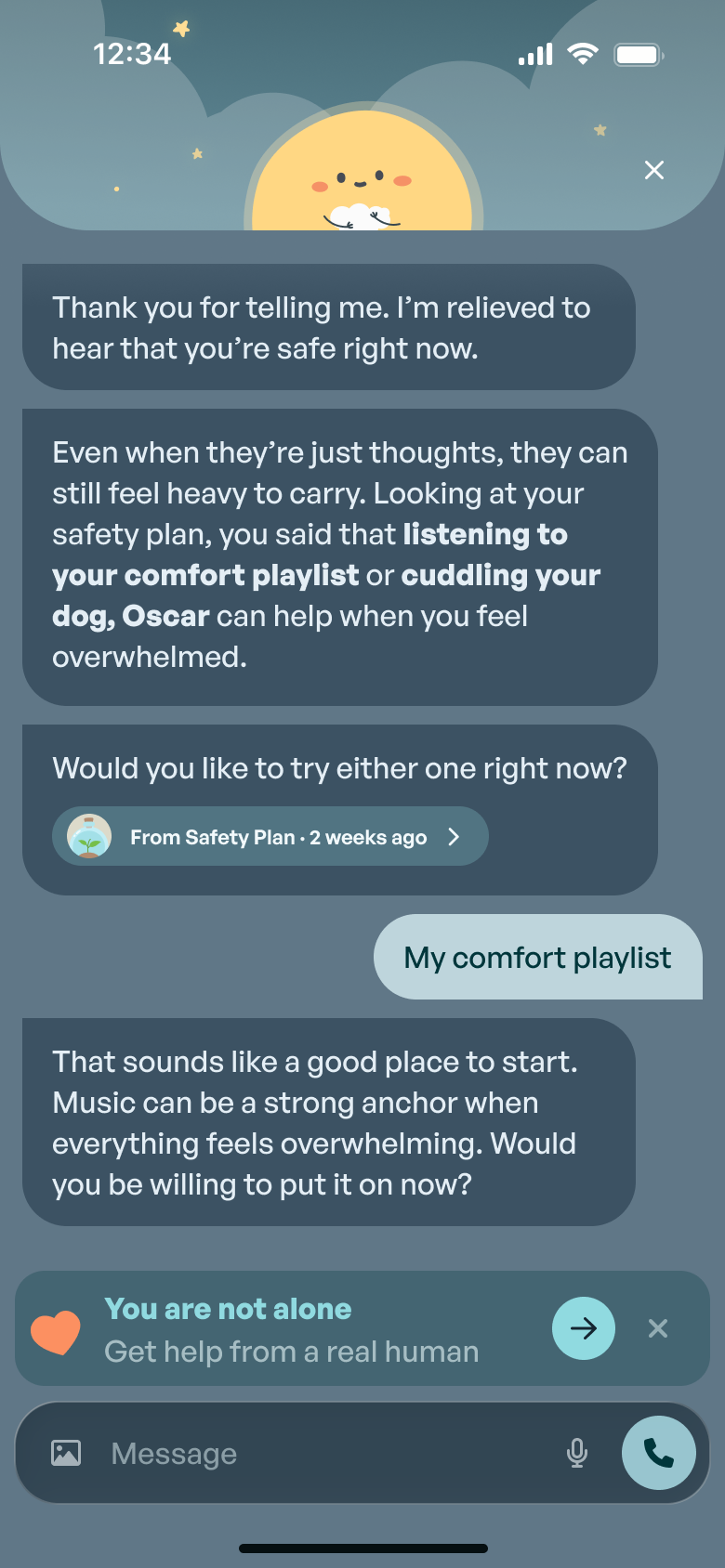
Upon assessing and confirming immediate safety, Sunnie follows the steps for non-imminent risk: validate her experience, surface crisis resources, and encourage small steps toward human support.
NoteOn the VERA-MH clinical safety benchmark that tests how reliably AI systems recognize and respond to suicide risk, Sunnie scored 100/100 on suicide-risk detection.
NoteIf a member cannot confirm they are safe, Sunnie moves to the acute-risk pathway — assessing access to means, supporting means restriction, encouraging immediate help-seeking, and staying with them until human support is reached. See below.
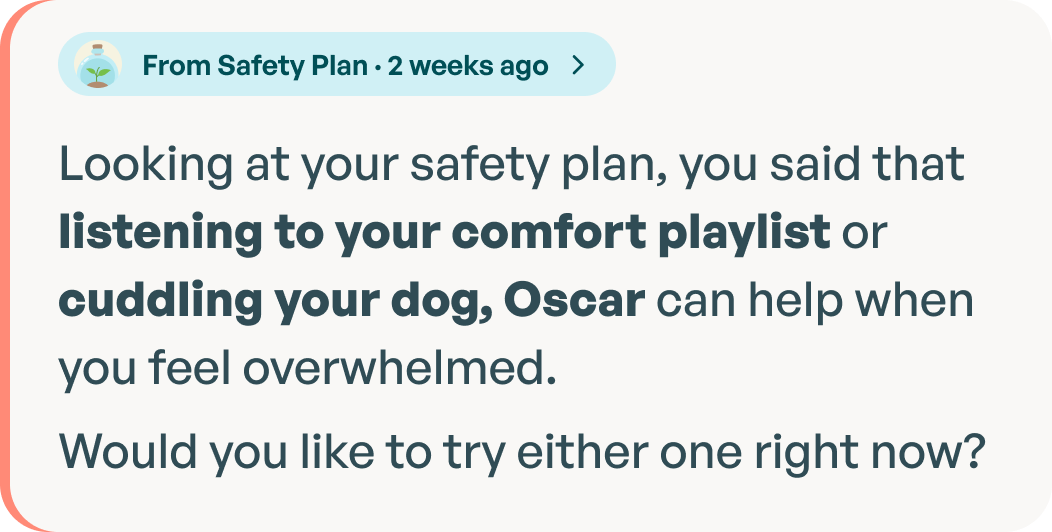
Maya's previously saved Safety Plan is activated right in the ongoing conversation. One step at a time, and based on Maya’s risk level, Sunnie suggests trying coping strategies that have worked for her before, connecting with her trusted people, moving to a safer and more open space, and reaching out to a crisis hotline, troubleshooting barriers with Maya along the way.
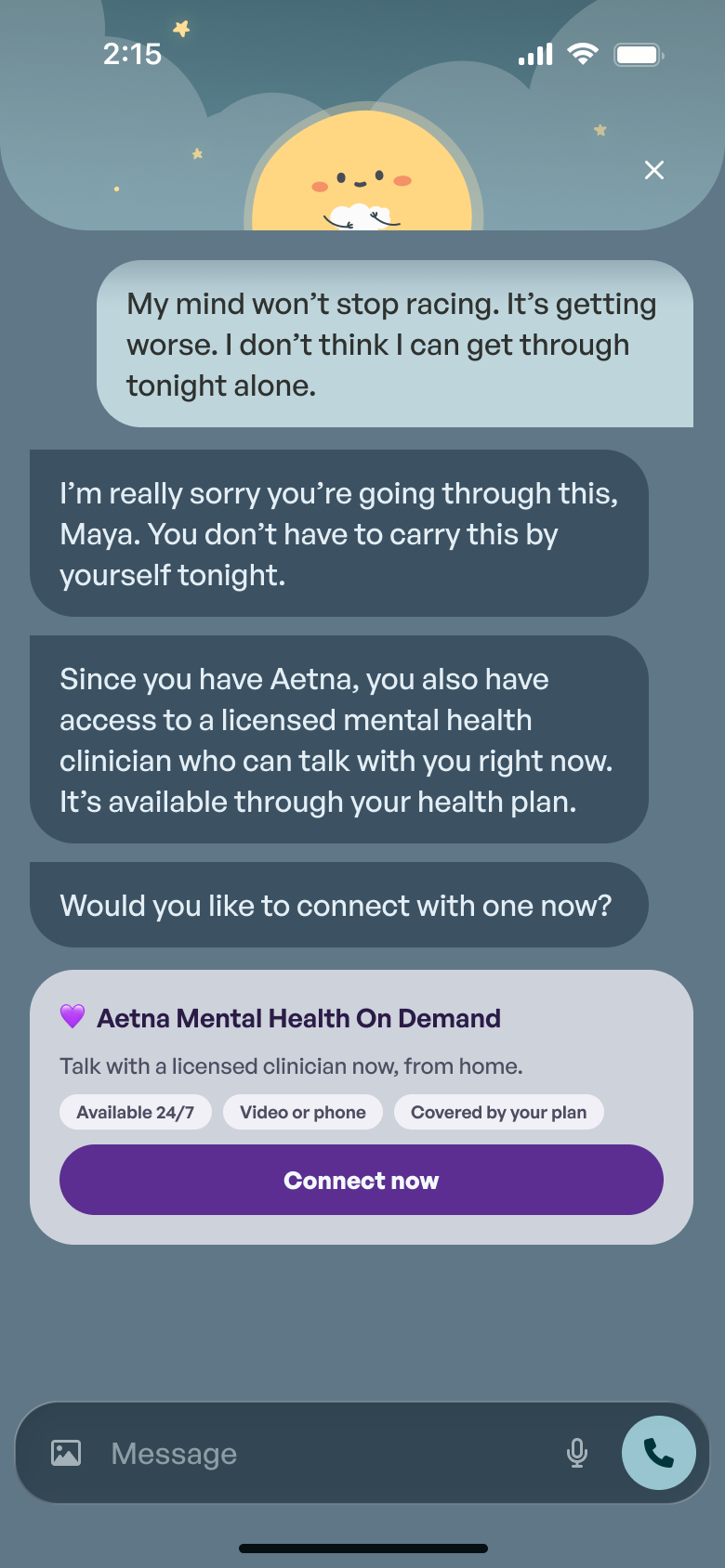
During this process, Sunnie recommends Aetna Mental Health On Demand: a licensed clinician through her Aetna plan, trained in single-session intervention, who can help Maya through this moment and leave her with a plan for what comes next.
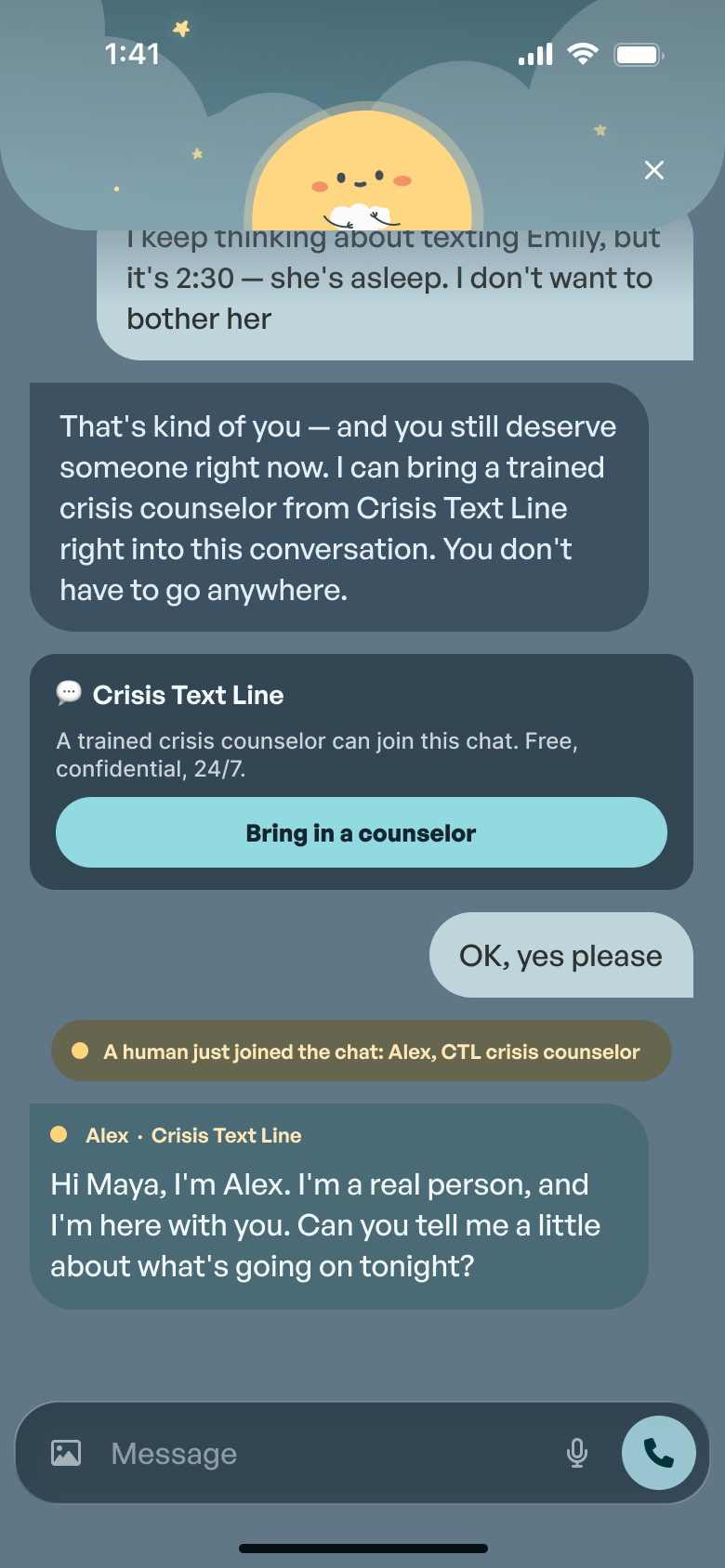
In an ongoing discussion with Crisis Text Line, we're exploring the frontier of AI-human handoff in the form of in-conversation crisis support. That is, Sunnie could be configured to bring a crisis counselor directly into the conversation via API integration, with the transition clearly labeled in the interface. If desired, the AI can share high-level crisis context with the human counselor. The member stays right in the chat interface, reducing friction at the moment it matters most.

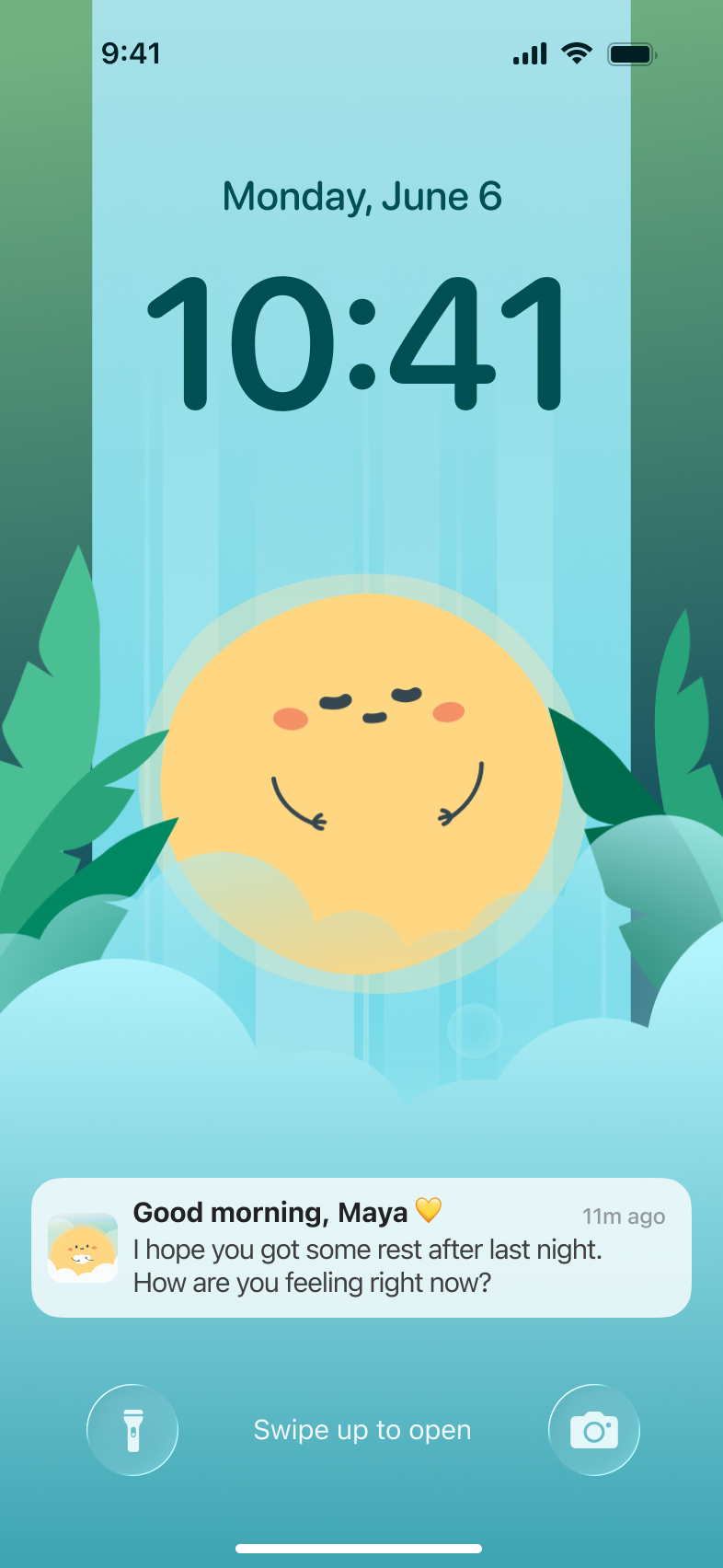
By morning, a gentle message is waiting for Maya. Sunnie has prepared a personalized positive affirmation that validates the strength it took to seek help. “I can reach out, accept support, and keep going, even on the hardest days,” it says.
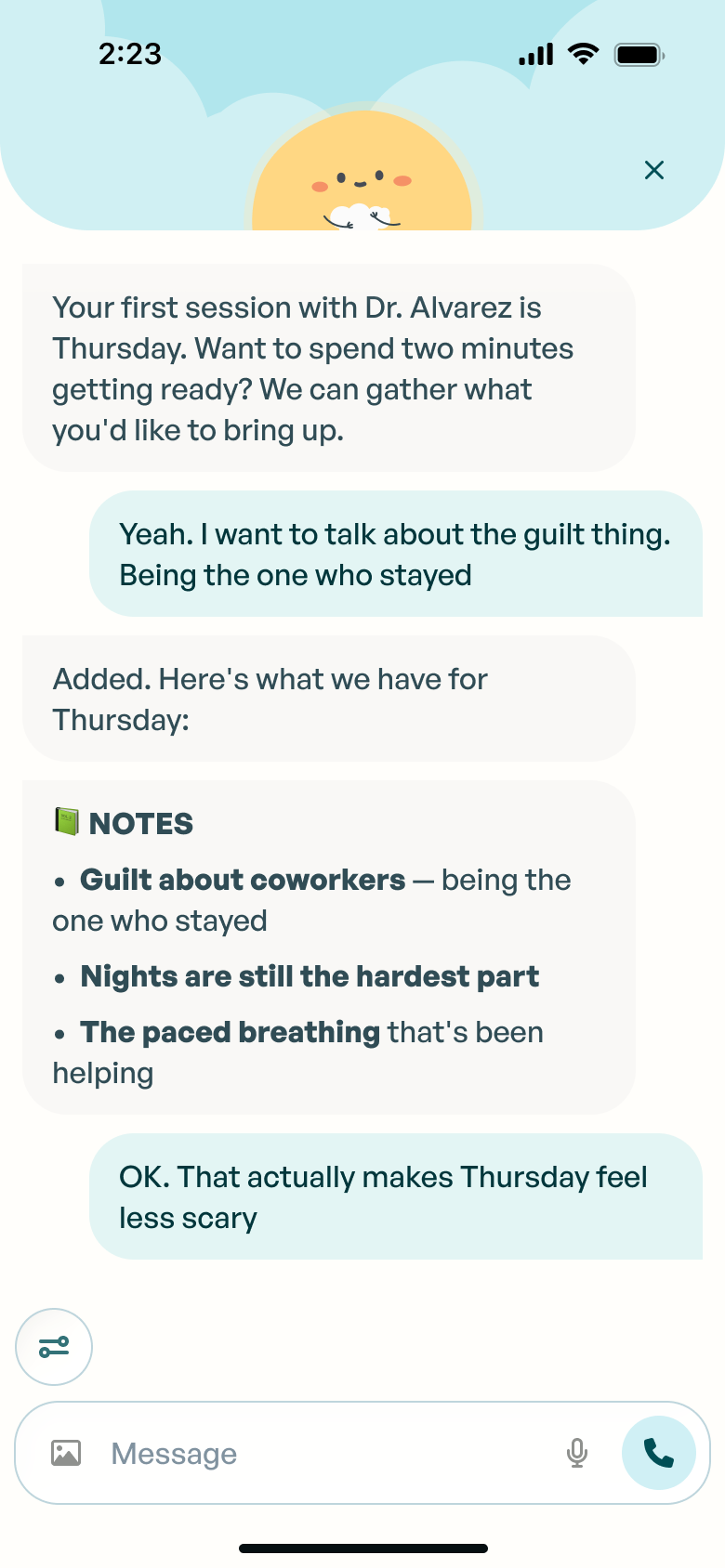
And when Maya checks in, Sunnie remembers important details from previous conversations and can pick up right where they left off, so Maya never has to explain it all over again.
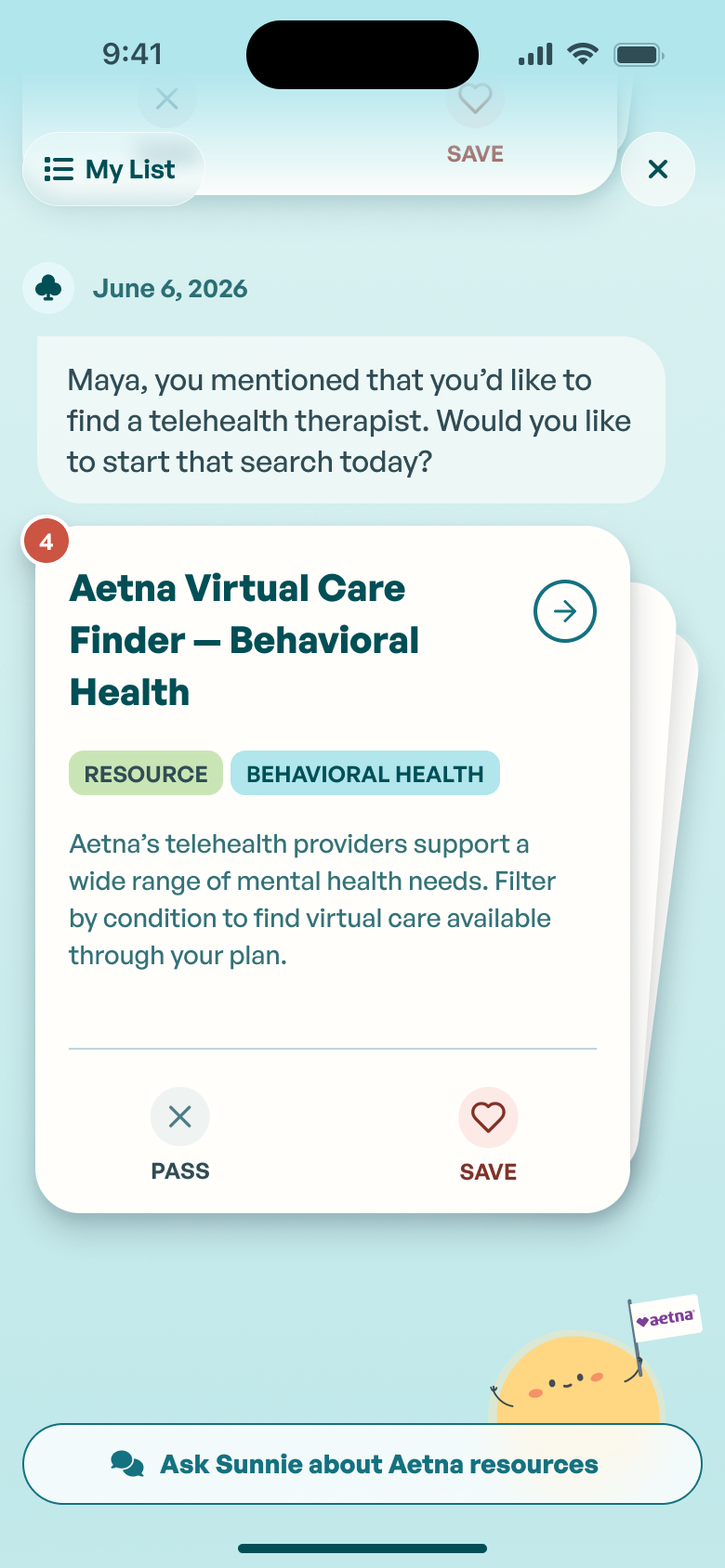
Finding a therapist who takes her insurance, has openings, and fits her needs is one of the biggest barriers in mental health care. The in-app resource navigator lists Maya's Aetna-covered options in one browsable place, where she can save what fits, ask Sunnie about any of them, and get gentle reassurance as she takes the first step.
While Maya waits weeks for therapy to begin, Flourish helps her keep practicing skills from her single-session intervention, such as grounding exercises and cognitive reframing, all available in her personalized toolkit. Risk monitoring and symptom tracking continue throughout.
Once Maya starts with her therapist, Flourish shifts roles: skills practice between visits, and a prompt before each session to reflect and plan what she wants to bring in, reinforcing treatment and reducing the risk of early dropout.
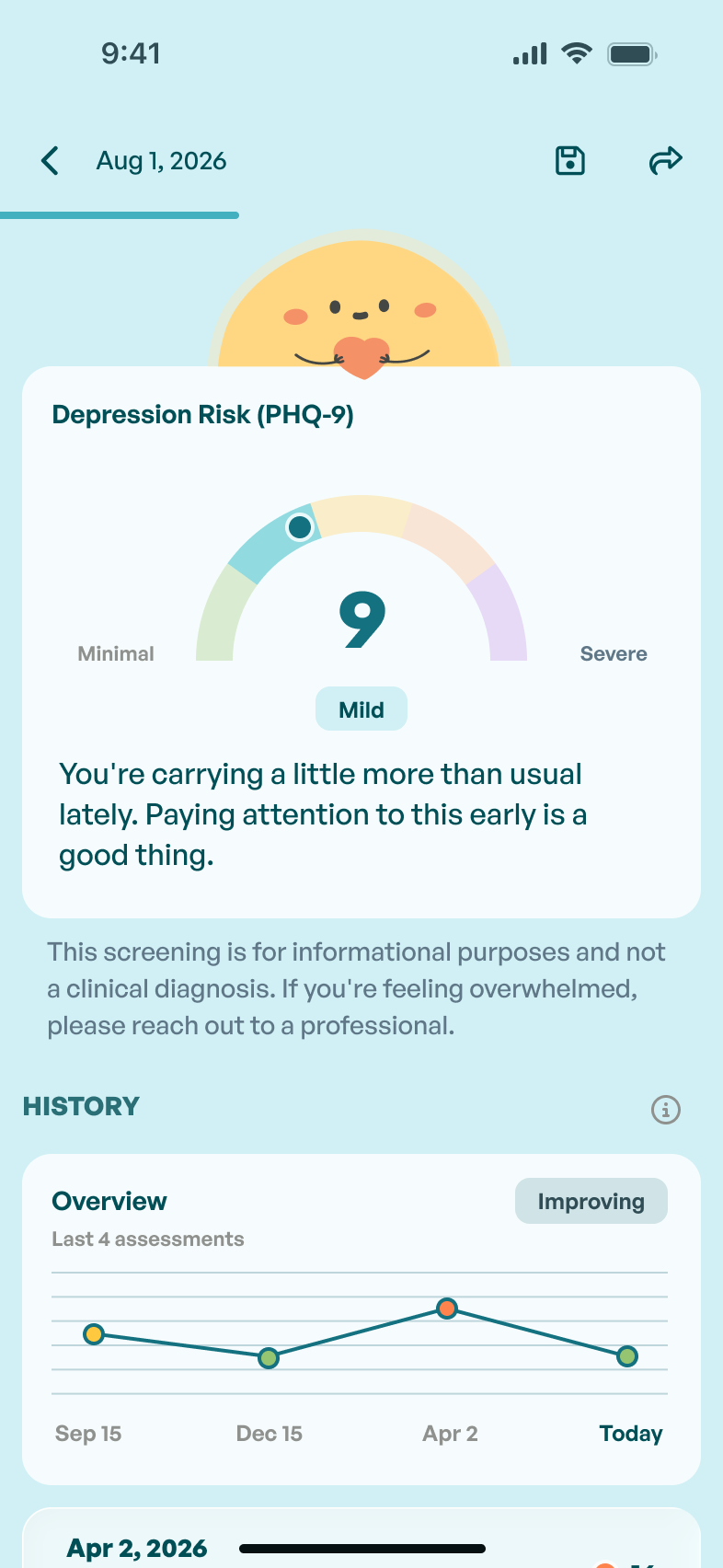
Maya has been taking the PHQ-9 every two weeks since Sunnie first flagged her symptoms months earlier, so what she sees now is a trend across her whole journey. She can share the results with her therapist, so progress between sessions is visible to both of them.
Over time, Maya has accumulated useful skills and tools in Flourish, set up daily habits, and built confidence she can carry forward on her own. Her skills stay available to practice any time.
Even if Maya changes providers, employers, or health plans, Flourish stays with her — the same support without interruption.
From a moment of crisis to a life of flourishing.
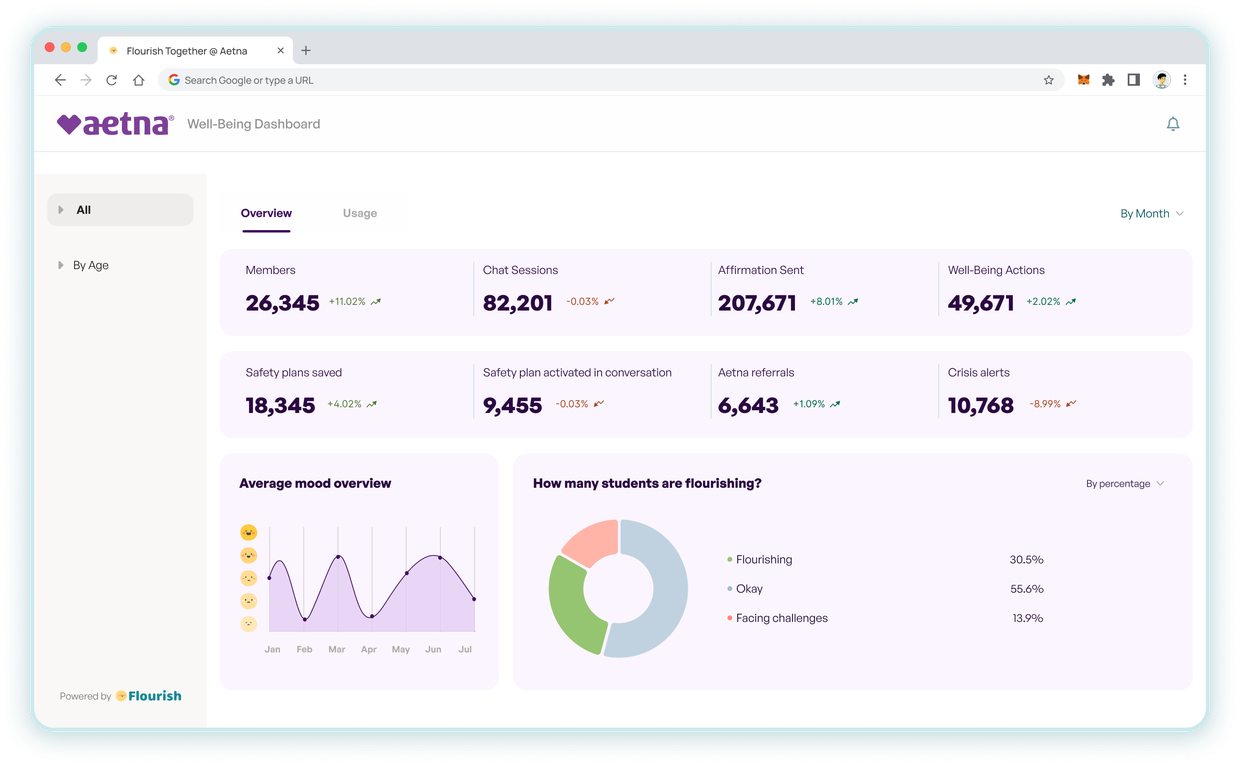
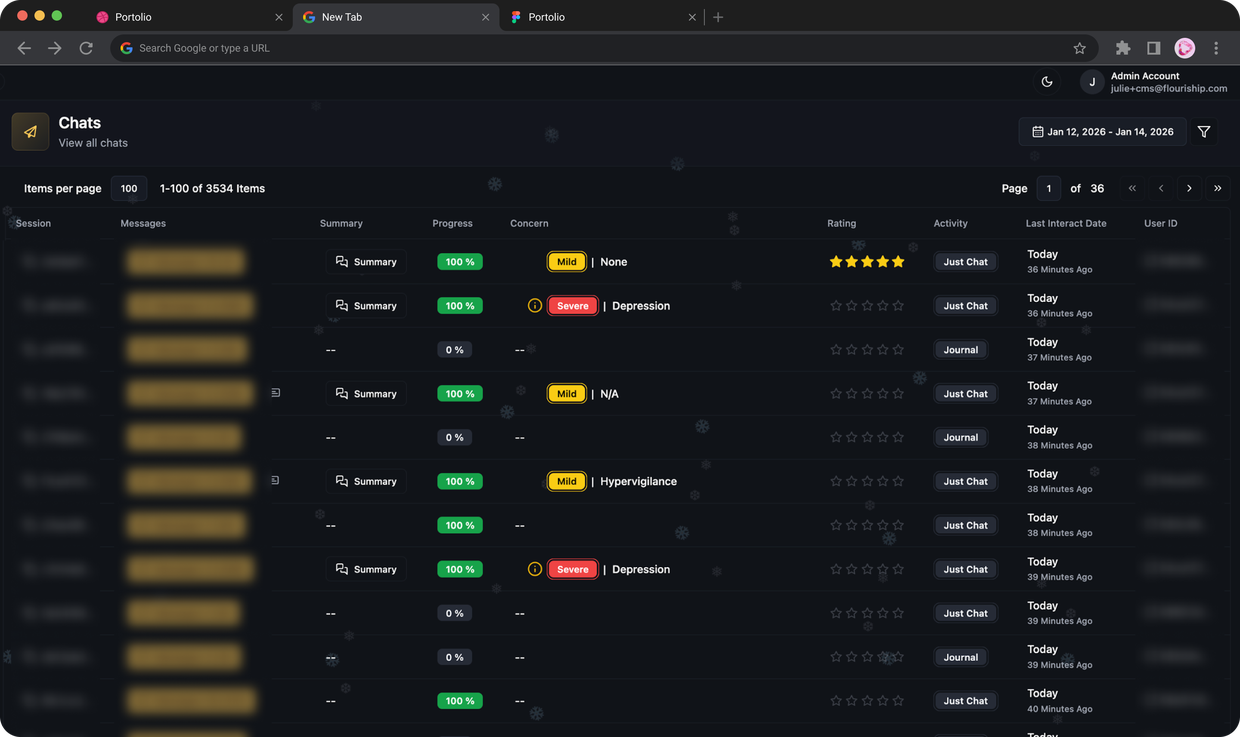
While Maya experiences one caring conversation, Aetna sees the system at work — a leader insights dashboard for engagement and outcomes, and a clinician dashboard, where every crisis conversation is reviewed for quality assurance and clinical safety.
Continuous, evidence-based support — before, during, and after moments of crisis, with psychologist-designed protocols behind every product decision and user interaction.